
Which is better and is either of them worth it?
NVIDIA introduced their G-Sync technology awhile ago and at CES 2014 AMD showed a version which they call “FreeSync”. Now I want to go over all the information on both technologies and see if they are the same as AMD claims but without the proprietary equipment. First off let me go over what exactly each are since if you don’t follow both companies closely you may not know the extent of what each is. First off is let us go over NVIDIA G-sync since it was first.
NVIDIA G-Sync
NVIDIA G-Sync is a display technology aimed at improving the gaming experience. G-Sync is basically a variable refresh rate technology that keeps both your GPU and monitor in sync by mainly letting your GPU control the refresh rate of your monitor. The goal of this is to minimize display shutter and lag. NVIDIA says by doing this objects will look sharper, smoother, and appear instantly on your monitor.
Criticisms made by AMD about having to have a proprietary expensive piece of hardware in your monitor to acheive G-Sync was explained by NVIDIA for making sure that the technology would be compatible with all their GPUs.

NVIDIA G-Sync
AMD “FreeSync”
In response to NVIDIA’s G-Sync, AMD ‘s “FreeSync” as a non-proprietary version that will do the same. Having said that to take advantage of “FreeSync” you do need a monitor with VESA’s VBLANK support and a GPU or APU that supports “FreeSync”. VBLANK keeps the same image on the screen without refreshing it and variable VBLANK can be the equivalent to G-Sync according to AMD.
Now criticisms go both ways. While NVIDIA did praise AMD for taking an interest and saying that with both companies investing in variable refresh rates will only benefit gamers most of all but in the same sentence pointed out that FreeSync was tested on laptops. This was pointed out because laptops are built around a different architecture that has a more direct interface between the GPU and display by utilizing FPD Link (Flat Panel Display Link) or eDP (embedded DisplayPort) connections. Tom Peterson of NVIDIA went further about how since desktop monitors use HDMI or DP, that typically has a scaler chip situated between the GPU and monitor, results in variable refresh rate impossible to achieve without having something on both sides. This is what lead NVIDIA to create the G-Sync module, so basically the G-Sync module takes over for the scaler chip.
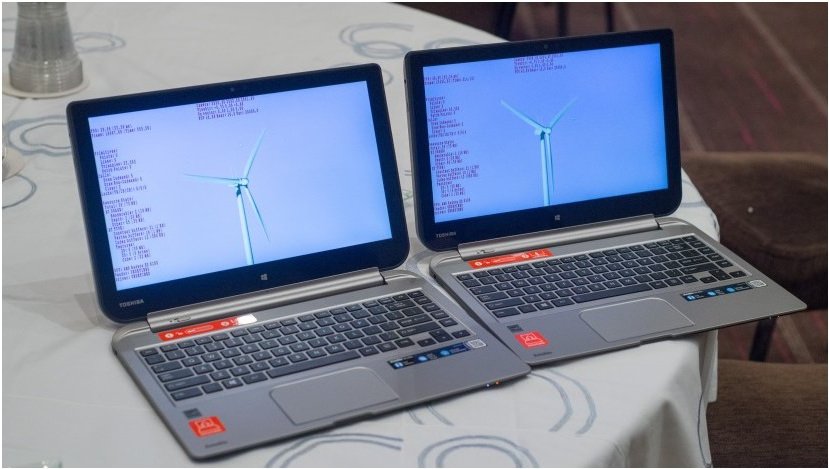
AMD FreeSync
So whats the point?
So now we get into the even bigger argument that may take over variable refresh rates in the future when it comes to gaming. Technically speaking DisplayPort already support variable refresh rates but won’t be mainstream per say until the launch of DisplayPort 1.3 standard. DP 1.3 is suppose to be finalized at the end Q2 2014 and you should see the ability to use “FreeSync” utilizing a VESA supported monitor and DP without anything further hardware and the software is already built into AMD’s Catalyst Controller suite software but just doesn’t show up in any menus currently. So technically speaking variable refresh rates could become mainstream without any extra modules and put NVIDIA’s G-Sync at a disadvantage in the future as manufacturers build this technology into their monitor without any extra cost and use it as a selling point in their advertising. When this could be is anyone’s guess right now but it is coming with DP becoming more and more prevalent compared to DVI, looking at the back of my AMD Radeon HD 7990 tells me this with only one DVI connection and four DPs.
Now until we get to this point to when “FreeSync” is available to with the VESA and DP standards becoming the norm and not the exception (DVI is the main connector currently), NVIDIA GPUs add another advantage IF you plan on buying monitors with G-Sync. NVIDIA has recently launched is their own DIY kit to add the G-Sync module to your existing monitor if you have the ASUS VG248QE monitor. Below is a video on modding your monitor with the NVIDIA G-Sync or head over to the webpage.
Sources – NVIDIA, TechofTomorrow, and TechReport.